Multi-Release · U.S. Department of War
PURSUE Declassified Archive
The Presidential Unsealing and Reporting System for UAP Encounters — a rolling declassification series from the U.S. Department of War. The archive includes the FBI 62-HQ-83894 case file, NASA Apollo / Mercury audio and lunar photography, DoE and CIA / ODNI records, and unresolved infrared sensor footage from CENTCOM, EUCOM, INDOPACOM, AFRICOM, and NORTHCOM. Originally released at war.gov/UFO.
Release
Agency
Showing 16 of 478 records.
Released June 12, 2026 · U.S. Department of War
8 records in this release
 PDF
PDFNASA · Low Earth Orbit
NASA-UAP-D022, Gemini 9 Debriefing, 1966
Gemini IX (renamed Gemini IX-A) was the seventh crewed flight of the Gemini series, launched on June 3, 1966. The mission’s primary objectives included a spacewalk and multiple scientific and medical experiments. This document, dated June 16, 1966, is a transcript of a NASA debriefing of astronauts Thomas Stafford and Eugene Cernan. Pages 2-5 of this document contain the astronauts’ accounts of their observations of “flashing lights” and “sparkles” during the mission.
 PDF
PDFNASA · Cape Kennedy, Florida
NASA-UAP-D021, Gemini 7 Technical Debriefing, 1965
This document is a preliminary transcript derived from voice recordings of the Gemini 7 flight crew debriefing conducted December 19-21, 1965, at the Crew Quarters, Cape Kennedy, Florida. Lights and flashes are mentioned and there is discussion about having proper illumination for vehicle docking. Borman and Lovell discuss celestial and terrestrial observational anomalies and note sightings of Mercury, meteors, aurora, and lightning. They also discuss not being able to see any stars once the Sun comes up.
 PDF
PDFNASA · Cape Kennedy, Florida
NASA-UAP-D020, Gemini 5 Technical Debriefing, Part II, 1965
This document is a preliminary transcript (Part II) derived from voice recordings of the Gemini 5 flight crew technical debriefing. NASA conducted this debriefing between August 30, 1965, and September 2, 1965, at the Crew Quarters, Cape Kennedy, Florida. Astronauts L. Gordon Cooper and Charles “Pete” Conrad described observing debris and “snow” and “all sorts of glittering pieces of this, that and the other thing” in the “Visual Sightings” section of the document (pages 157-220).
 PDF
PDFNASA · Cape Kennedy, Florida
NASA-UAP-D019, Gemini 5 Technical Debriefing, Part I, 1965
This document is a preliminary transcript (Part I) derived from voice recordings of the Gemini 5 flight crew technical debriefing. NASA conducted this debriefing between August 30, 1965, and September 2, 1965, at the Crew Quarters, Cape Kennedy, Florida.
 PDF
PDFNASA · Low Earth Orbit
NASA-UAP-D018, Gemini 4 Experiment Debriefing, 1967
Gemini IV was the second crewed mission of the Gemini series. Astronauts James McDivitt and Edward White successfully completed the four-day flight between June 3 and June 7, 1965. The mission included the first American spacewalk. This collection of documents contains a transcription of the astronauts recounting their observations of bright particles outside the spacecraft, dated circa June 25, 1967, on pages 78-81, and page 101.
 PDF
PDFNASA · North Atlantic Ocean
NASA-UAP-D017, Preliminary Gemini 4 Crew Debriefing, Part II, 1965
This document is a preliminary transcript (Part II) derived from voice recordings of the Gemini 4 flight crew debriefing taken aboard the recovery ship, USS Wasp, on June 9, 1965. Part II of this document contains the “Visual Sightings” section of the debriefing (pages 196-224), where astronauts James McDivitt and Edward White describe their observations while aboard the spacecraft.
 PDF
PDFNASA · North Atlantic Ocean
NASA-UAP-D016, Preliminary Gemini 4 Crew Debriefing, Part I, 1965
This document is a preliminary transcript (Part I) derived from voice recordings of the Gemini 4 flight crew debriefing taken aboard the recovery ship, USS Wasp, on June 9, 1965. Astronaut Ed White recounts seeing “sparkles” during the flight.
 PDF
PDFNASA
NASA-UAP-D015, Astronaut Scientific Debriefings, 1962-1963
This file contains memoranda, correspondence, reports, and other materials relating to contemporary scientific interest in investigating the nature of luminous phenomena reported by astronauts John Glenn and Walter Schirra during spaceflight. This collection includes transcripts from NASA interviews and debriefings with both astronauts regarding those observations. It also contains details relating to scientific observations of atmospheric phenomena, including brief descriptions of luminous particles, experiences while aboard spacecraft, and circa 1955 theoretical analysis of meteoric particles entering the atmosphere. Pages 34-35, 55-56, 57-63, 64-113, and 122-127 feature content relevant to the PURSUE initiative.
Released May 8, 2026 · U.S. Department of War
8 records in this release
 PDF
PDFNASA
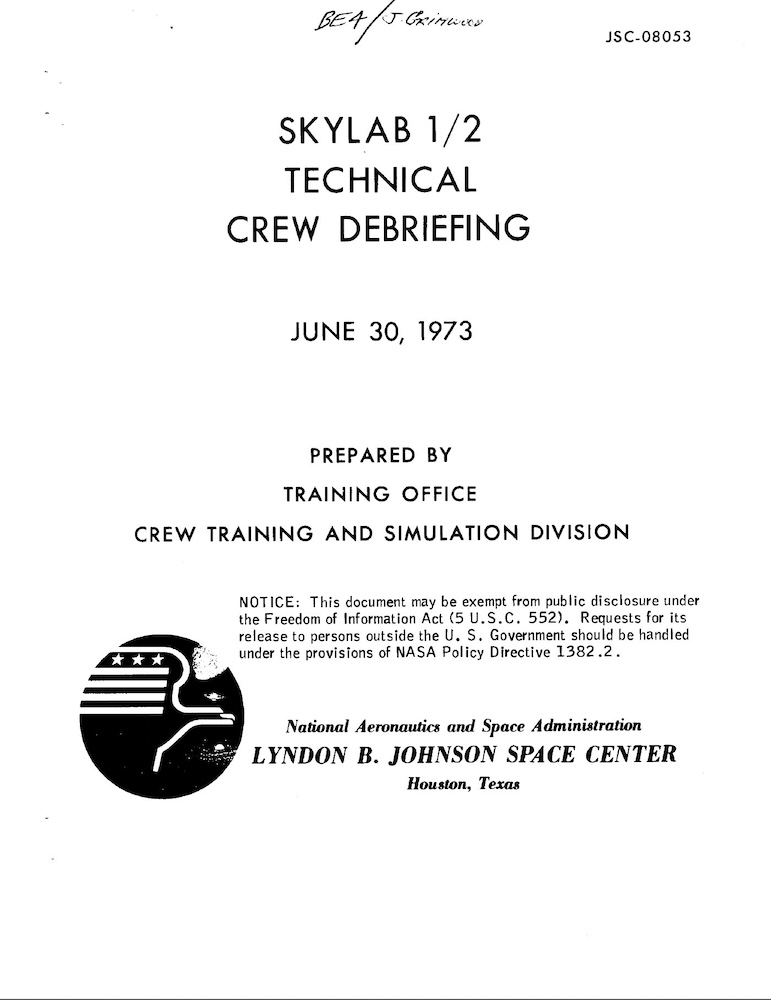
NASA-UAP-D7, Skylab Techincal Crew Debriefing 1973
Launched on May 14, 1973, Skylab was the United States’ first laboratory in space. From 1973 to 1974, the station was visited by three crews. This document contains excerpts from all three crews to visit the station. In the first excerpt taken from Skylab 1/2 [first crew] Technical Debriefing from June 30, 1973, highlights crew observations of light flashes. The second excerpt taken from Skylab 1/3 Technical Crew Debriefing from October 4, 1973, highlights two observations—a satellite in similar orbit and another object with a “reddish hue to it.” The final excerpt taken from the Skylab 1/4 Technical Crew Debriefing from February 22, 1974, highlights an observation of flashing lights outside Skylab. • Skylab 2 crew observation: o Page 23-20. [Science Pilot for Skylab 2, Joesph Kerwin] “We saw light flashes. I think all of us saw them. I saw them most often when I was in the sack at night with my eyes closed but awake naturally. They tended to wax and wane in frequency.” • Skylab 3 crew observations: o Page 7-4. [Science Pilot for Skylab 3, Owen Garriott] “We saw that satellite about a week before splashdown. That was one of the most unusual things that we saw and I guess Jack [Lousma] noticed it looking out the window. This bright reddish object was out there and we tracked it for about 5 or 10 minutes. It was obviously a satellite in a very similar orbit to our own.” o Page 20-1. [Science Pilot for Skylab 3, Owen Garriott] “Jack [Lousma] first noticed this rather large red star out the wardroom window. Upon close examination, it was much brighter than Jupiter or any of the other planets. It had a reddish hue to it, even though it was well above the horizon.” • Skylab 4 crew observation o Page 7-8. [Commander for Skylab 4, Gerald P. Carr] “One other area of unusual events that we reported on the dump tapes was that on occasion we saw some lights flashing outside with very a definite motion relative to ours. We presumed that they were other pieces of Skylab, or possibly other satellites.”
 PDF
PDFNASA
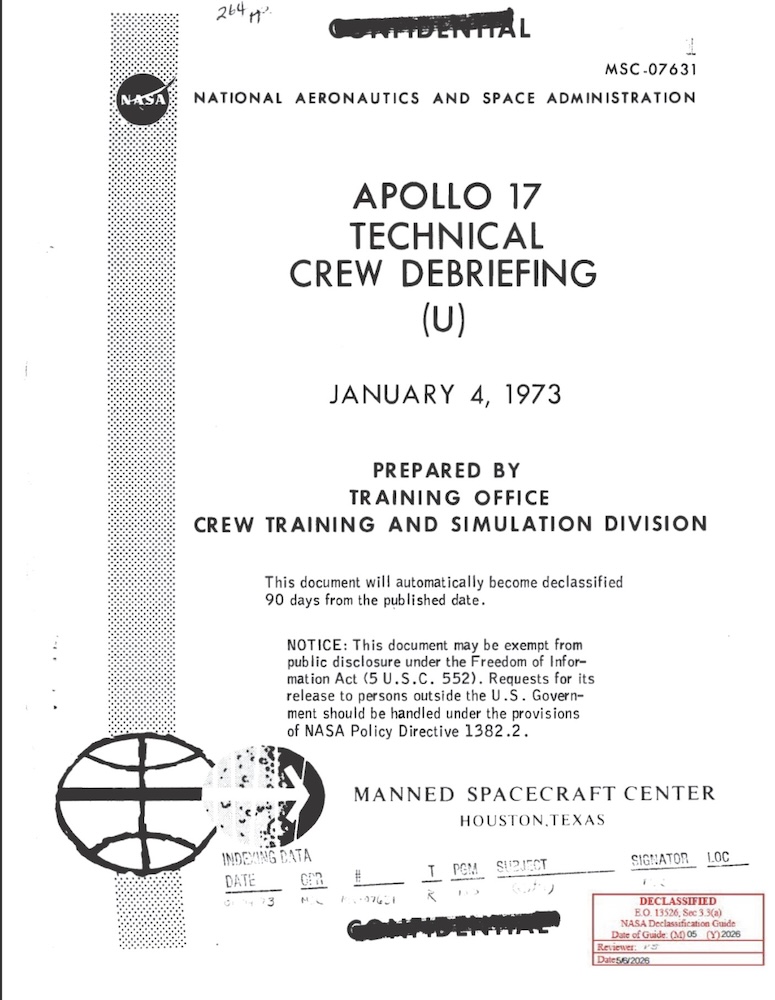
NASA-UAP-D6, Apollo 17 Technical Crew Debriefing, 1973
Apollo 17 was the ninth crewed U.S. mission to the Moon, and the sixth to land Astronauts on the lunar surface. This document is an excerpt from the Apollo 17 Technical Crew Debriefing on January 4, 1973, in which astronaut Harrison Schmitt reported seeing light flashes. • Page 24-4. [Lunar Module Pilot Harrison Schmitt]: “We had light flashes just about continuously during the whole flight when we were dark adapted. I had one which I thought was a flash on the lunar surface. That one period of time when we had the blindfolds on for the ALFMED [Apollo Light Flash Moving Emulsion Detector] experiment there were just no visible flashes, although that evening, that night, before I went to sleep, I noticed that I was seeing the light flashes again.”
 PDF
PDFNASA
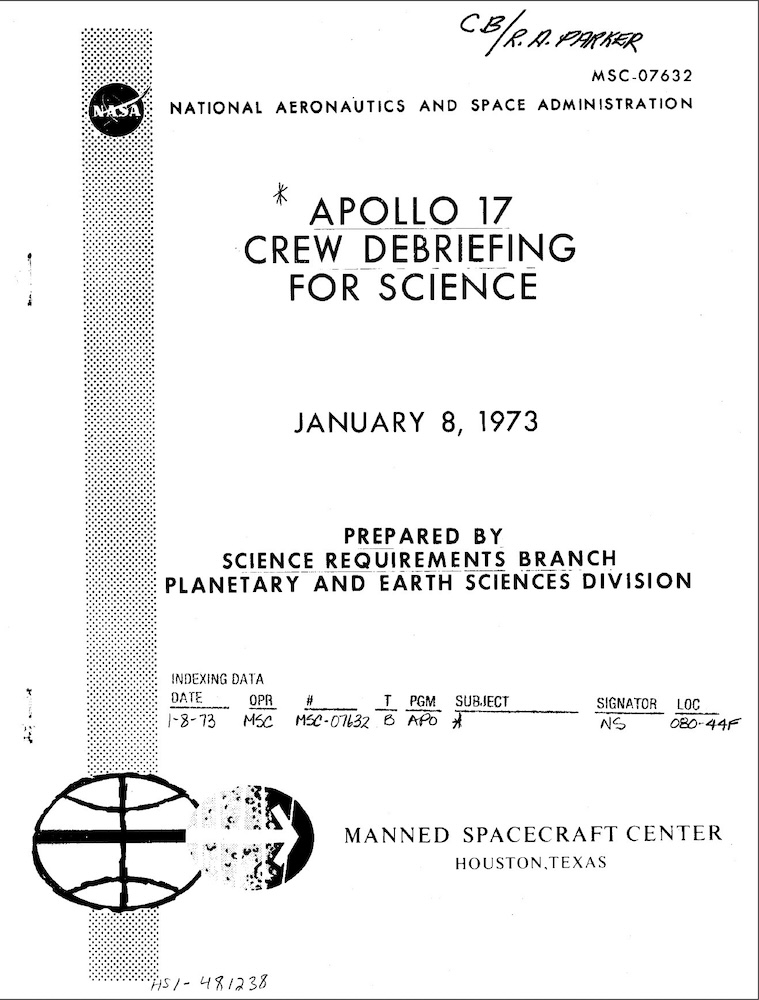
NASA-UAP-D5, Apollo 17 Crew Debriefing for Science, 1973
Apollo 17 was the ninth crewed U.S. mission to the Moon, and the sixth to land Astronauts on the lunar surface. This document is an excerpt from the Apollo 17 Crew Debriefing for Science on January 8, 1973, in which Dick Henry, co-investigator on the ultraviolet experiment on Apollo 17, discusses seeing results that were unexpected. • Pages 119-120. “One of the most exciting results of X-ray astronomy was the fact that an X-ray background was observed over the sky that nobody had expected, and part of this is the gamma-ray background that Dr. Trombka talked about. In the UV, nobody knows, but you never know until you look. You do have to deal with this background of stars that we know is there. So, we did look at a large number of different points at high galactic latitudes, both north and south. The spectrum that we see is above this dark count. In other words, this abnormally high dark current did not, in fact, interfere with that experiment. The spectrum that we see looks like the spectrum of the hot star; however, we know that there were no hot stars within our field of view. Therefore, the most conservative interpretation, I think, is that what we're seeing is light from hot stars in the galactic plane going up out of the plane and reflecting off interstellar dust. There are certain characteristics of the spectrum, though, that don't fit that theory, and it's at least possible that this is extragalactic radiation. I'm looking forward very much to the detailed computer study of this, but it's going to take a long time.”
 PDF
PDFNASA
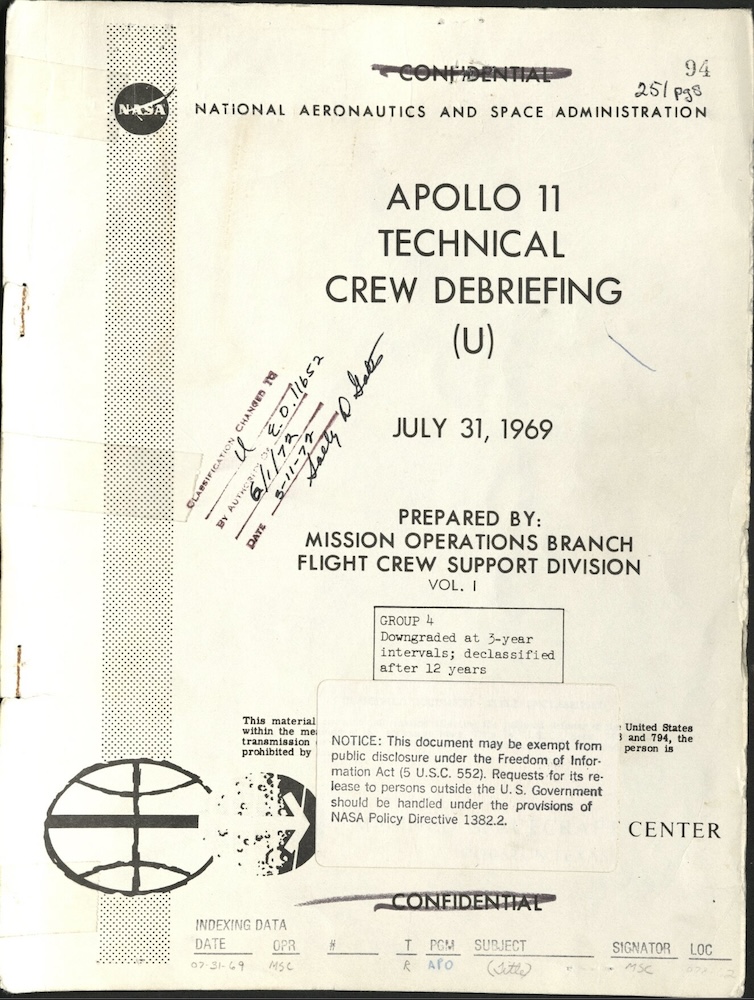
NASA-UAP-D4, Apollo 11 Technical Crew Debriefing, 1969
Apollo 11 was the third crewed mission to the Moon and the first to land Astronauts on the lunar surface. This document is an excerpt from the Apollo 11 Technical Crew Debriefing (Volumes 1 and 2) from July 31, 1969. The document highlights three observations: one, an object on the way out to the Moon; two, flashes of light inside the cabin; and three, a sighting on the return trip of a bright light tentatively assumed by the crew to be a laser. • Page 6-33 (Vol. 1). [Lunar Module Pilot for Apollo 11, Buzz Aldrin]: “The first unusual thing that we saw I guess was 1 day out or something pretty close to the moon. It had a sizeable dimension to it, so we put the monocular on it.” The crew speculated that it could have been the S-IVB stage of the Saturn V launch vehicle. • Page 6-37 (Vol. 1). [Lunar Module Pilot for Apollo 11, Buzz Aldrin] “The other observation that I made accumulated gradually. I don’t know whether I saw it the first night, but I’m sure I saw it the second night. I was trying to go to sleep with all the lights out. I observed what I thought were little flashes inside the cabin, spaced a couple of minutes apart…” • Page 21-1 (Vol. 2). [Lunar Module Pilot for Apollo 11, Buzz Aldrin] “I observed what appeared to be a fairly bright light source which we tentatively ascribed to a possible laser.”
 PDF
PDFNASA · Low Earth Orbit
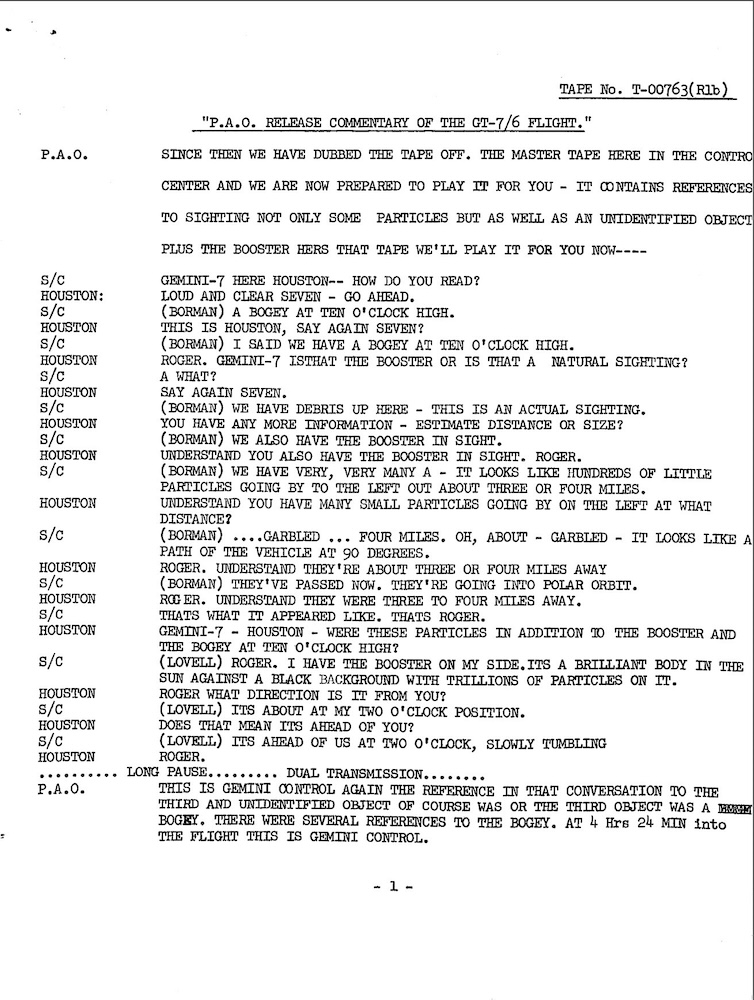
NASA-UAP-D3, Gemini 7 Transcript, 1965
Gemini 7 was the tenth crewed American spaceflight. This document is a transcript of communications between the flight crew, Astronauts James “Jim” Lovell and Frank Borman, and the Manned Flight Center (now known as Johnson Space Center) in Houston, Texas. The transcript begins with Borman’s report of a “bogey,” contemporary nomenclature for an unknown aircraft, as well as a debris field. Borman described the debris field as consisting of “very, very many […] hundreds of little particles.” He estimated the particles’ distance from the spacecraft to be four miles. Lovell described observing a “brilliant body in the sun against a black background with trillions of particles on it.” This document also includes handwritten notes documenting the encounter, annotated with the phrase “UFO Sighting by Borman” in the top right corner.
 PDF
PDFNASA · Moon
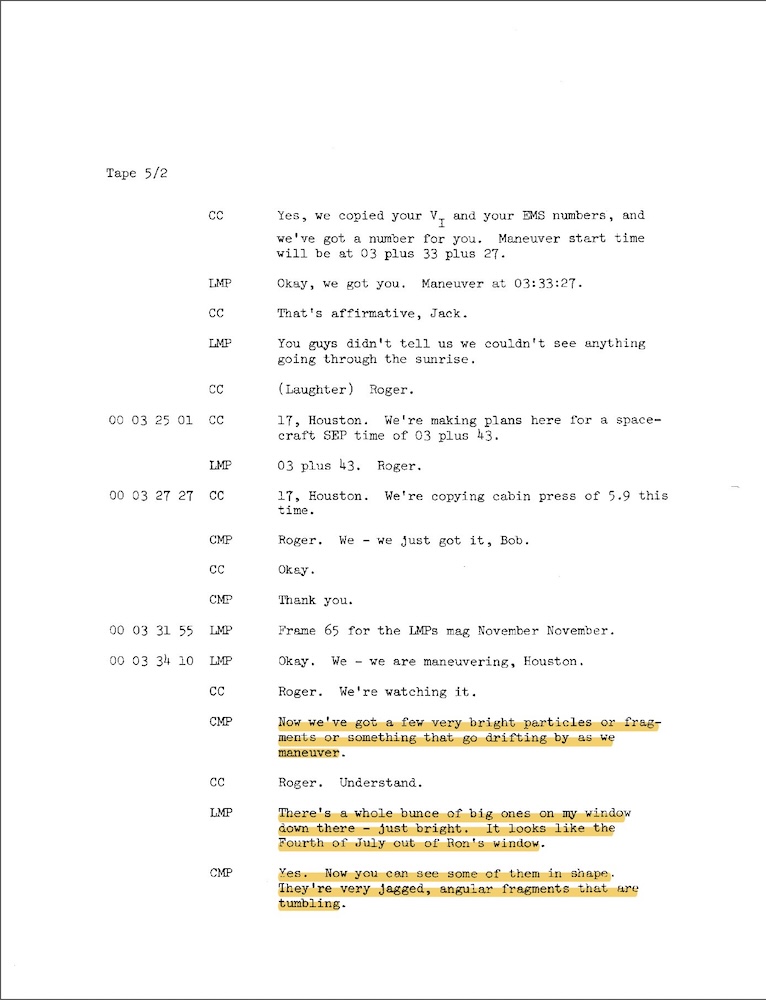
NASA-UAP-D2, Apollo 17 Transcript, 1972
Apollo 17 was the ninth crewed U.S. mission to the Moon, and the sixth to land astronauts on the lunar surface. This document is an excerpt from the Apollo 17 Technical Air-to-Ground Voice Transcription, December 1972, highlighting three periods in which astronauts reported observing unidentified phenomenon: a nine minute period on the first day, a three hour period on the second day, and a six minute period on the third day. • Day 00, Hour 03, Minute 34, Second 10 through Day 00, Hour 03, Minute 42, Second 29: o Command Module Pilot (CMP), Ronald Evans, reported observing “very bright particles or fragments” drifting and “tumbling” near the spacecraft as it maneuvered. Lunar Module Pilot (LMP), Harrison “Jack” Schmitt, described the phenomenon as looking “like the Fourth of July.” The astronauts speculated that the phenomenon may be attributable to ice or paint fragments dislodging from a separated component of the spacecraft (S-IVB) but characterized that assessment as a “wild guess.” • Day 02, Hour 18, Minute 42, Second 34 through Day 02, Hour 21, Minute 07, Second 05: o Mission Commander, Eugene A. Cernan, reported difficulty sleeping and described having observed “some sets of the streaks.” He also described an intense light flashing between his eyes, describing its intensity as comparable to that of a train headlight and characterizing it as “imposing.” Over the next three hours, Cernan described observing several flashing, rotating phenomenon that he assessed as corresponding to physical objects in space rather than a purely optical phenomenon. LMP Schmitt also reported observing similar phenomenon, though he again assessed the source of his observation to be a separated rocket stage (S-IVB). At 02:20:55:22, Cernan reported observing two additional distant flashing objects, though he assessed them as Spacecraft/Lunar Module Adapter panels (SLA panel), another separated component of the Saturn V rocket. • Day 03, Hour 15, Minute 33, Second 25 through Day 03, Hour 15, Minute 39, Second 46: o At 03:15:38:09, LMP Schmitt exclaimed that he had observed a flash on the lunar surface north of Grimaldi (crater).
 PDF
PDFNASA · Moon
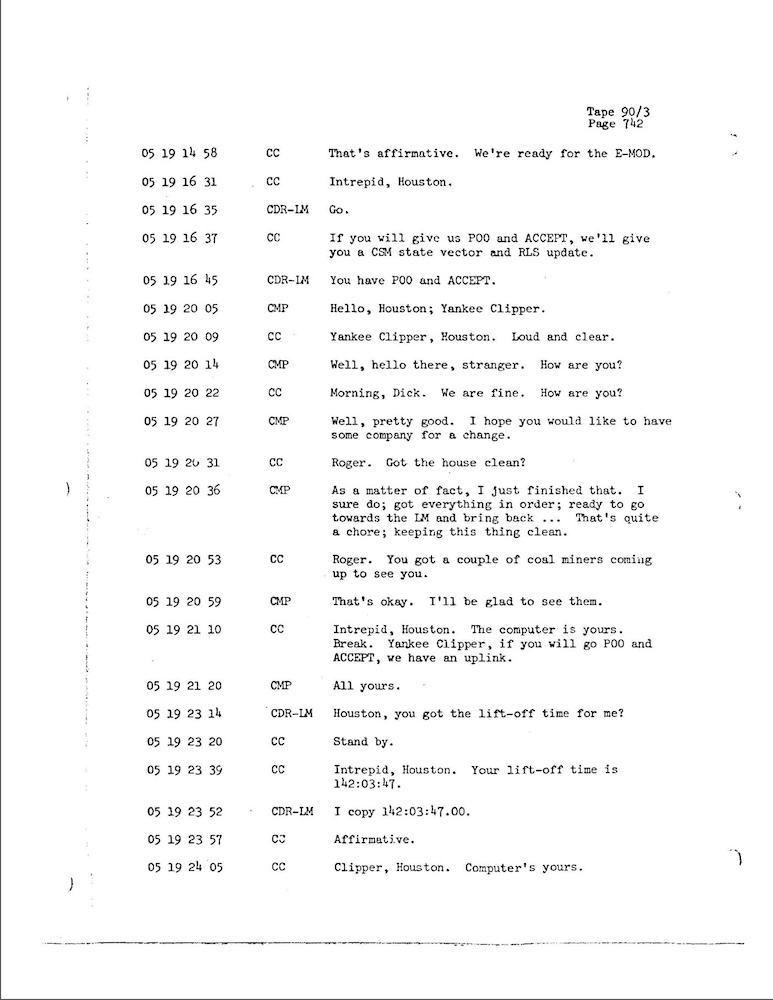
NASA-UAP-D1, Apollo 12 Transcript, 1969
Apollo 12 was the fourth crewed U.S. mission to the Moon and the second to land astronauts on the lunar surface. This document is an excerpt from the Apollo 12 Technical Air-to-Ground Voice Transcription, November 1969, highlighting two periods in which astronauts reported observing unidentified phenomenon: a one hour period on the fifth day, and a two minute period on the sixth day. These transcripts contain contemporaneous observations by the flight crew reacting to unidentified phenomenon. • Day 05, Hour 19, Minute 14, Second 58 through Day 05, Hour 20, Minute 12, Second 14: o At 05:19:27:25, the pilot of the Lunar Module (LMP-LM), Astronaut Alan L. Bean, described observing particles and flashes of light “sailing off in space” via the onboard Alignment Optical Telescope (AOT). He characterized these phenomenon as “escaping the Moon.” • Day 06, Hour 00, Minute 21, Second 42 through Day 06, Hour 00, Minute 23, Second 33: o Mission Commander, Charles “Pete” Conrad, described observing floating debris outside the lunar module, which had been illuminated by the module’s onboard tracking light. At 06:00:21:51, Conrad assessed that the tracking light had burnt out because he could no longer see the debris from the module.
 PDF
PDFNASA
255_413270_UFO's_and_Defense_What_Should_we_Prepare_For
This file contains an independent report on UFOs written by the French association COMETA (previously published in the French magazine VDS in 1999), which details the results of a study by the Institute of Higher Studies for National Defence. The file also includes a letter from Carol Rosin in which she notes that she was spokesperson for von Braun during the last years of his life.